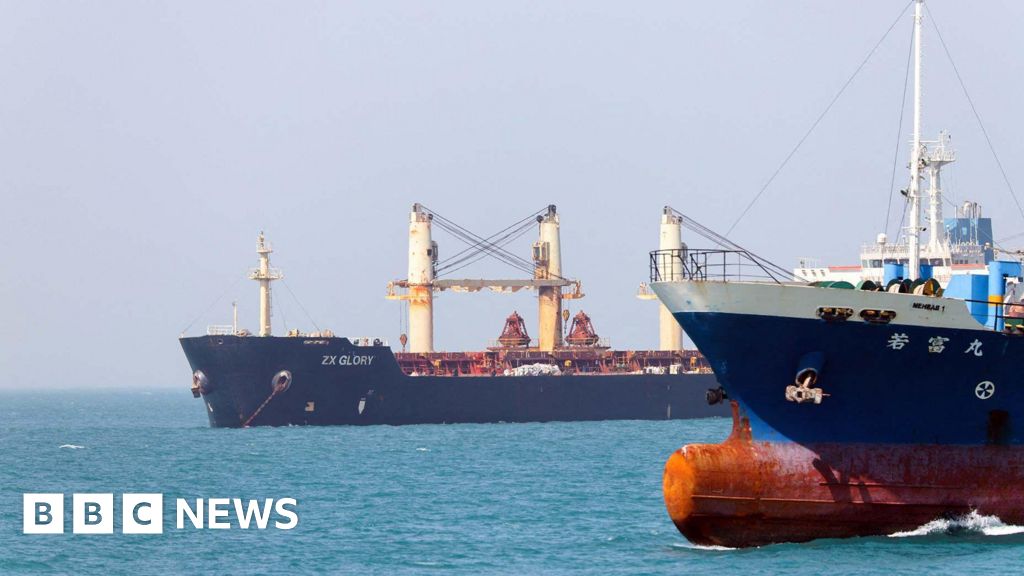
The United States and Iran announced a framework or preliminary agreement intended to end hostilities and reopen the Strait of Hormuz.
Oil prices dropped by roughly 4% to 5% after the deal was announced, with Brent crude trading around $83 to $84 a barrel and WTI around $80 to $81 in cited reports.
The Strait of Hormuz is a critical energy chokepoint and handles about one-fifth of global oil consumption or flows, making its status important to global energy markets.
A reopening or normalization of shipping through the Strait of Hormuz is expected to ease concerns about oil supplies, lower freight costs and reduce inflation pressure for major importers such as India.
India is especially exposed to changes in oil prices because it imports more than 85% of its crude oil needs.
Analysts and reports caution that lower prices may not immediately translate into fully restored energy flows because shipping through the strait, damaged infrastructure and depleted reserves will take time to normalize.
How left and right read it
Both agree
Reopening the Strait of Hormuz eased immediate supply fears in a market that depends heavily on that chokepoint, but neither framing treats the price drop as full recovery while shipping, infrastructure and reserves still need time to normalize.
They split on
Less a disagreement than a question of emphasis: the broader economic relief from lower oil and freight costs, versus the market signal itself as the clearest proof that de-escalation changed expectations.
International Affairs
Trump and Putin discuss Ukraine, Iran and a possible U.S. visit to Russia in phone call
The Kremlin said the call lasted about an hour and included discussion of Ukraine and Iran.
According to Kremlin adviser Yuri Ushakov, Trump told Putin that ending the fighting in Ukraine was vital and that he was ready to help.
Ushakov said Trump also told Putin that a U.S.-Iran agreement was close.
The Kremlin said Putin called Trump in connection with Trump's 80th birthday and offered congratulations during the conversation.
Reports citing the Kremlin said U.S. envoys Steve Witkoff and Jared Kushner were expected to visit Russia soon.
How left and right read it
Both agree
High-level U.S.-Russia contact is continuing on Ukraine without any announced ceasefire or final agreement, making the real significance of the call its evidence of active diplomacy alongside a war that still has not been brought to an end.
They split on
Less a disagreement than a question of emphasis: the failure of leader-level contact to deliver concrete relief from an ongoing war, versus the value of keeping direct diplomatic channels open while avoiding exaggerated claims about progress.
Business & Markets
ASX 200 rises as reported US-Iran deal pushes oil lower and lifts global markets
The Facts
Australia's S&P/ASX 200 rose about 1.3% on the day as markets responded to reports of a US-Iran deal.
Reports said the United States and Iran had reached a preliminary or framework deal that included reopening the Strait of Hormuz.
The reported deal lifted stock markets across Asia, including strong gains in Japan and South Korea as well as advances in Australia and Singapore.
Oil prices fell more than 4% after the reported agreement, with Brent crude dropping to around three-month lows.
Investors and analysts linked the market reaction to reduced concern about energy-supply disruption through the Strait of Hormuz, a key route for global oil and gas flows.
The agreement was not presented as final: reports said no full text had been released and a formal signing was expected later in Switzerland.
How left and right read it
Both agree
A reported reopening of the Strait of Hormuz was enough to lift stocks and push oil sharply lower, underscoring a shared premise that stability at a major energy chokepoint quickly affects everyday economic conditions even before a deal is final.
They split on
Less a disagreement than a question of emphasis: the immediate relief lower oil and calmer markets can bring, versus the strategic lesson that prosperity still hinges on keeping a vital trade route open.
Business & Markets
Trump says he may impose 100% tariffs on French wine and champagne over France’s digital tax
Trump said the U.S. would impose 100% tariffs on French wine and champagne if France does not withdraw its digital tax on American technology companies.
Trump said he had conveyed this warning directly to French President Emmanuel Macron.
The French measure at the center of the dispute is a 3% digital services tax on revenue earned in France by large technology companies.
Multiple reports say the tax has been in place since 2019.
Reports identify major U.S. tech companies affected by the French tax, including Alphabet/Google, Amazon, Apple and Facebook/Meta.
The tariff threat targets a major French export sector, and French wine and spirits exporters said it would be bad news for an industry that depends on exports to the U.S.
How left and right read it
Both agree
A French tax on revenue earned there by large American technology companies triggered a direct U.S. threat against French wine and champagne, putting a major export industry at risk even before any tariffs were actually imposed.
They split on
Whether the story is about using a major French export sector as coercive leverage over a tax on big tech, or about a reciprocal, transactional response to France taxing large American technology companies.
U.S. Politics
Georgia lawmakers return for special session as QR-code vote tally deadline nears
Georgia lawmakers are set to return to the Capitol for a special legislative session this week.
Georgia's current election system relies on a QR code printed on ballots to tally votes.
A 2024 Georgia law prohibits using QR codes as the official method of tabulating votes after July 1, 2026.
No replacement method for tabulating votes had been implemented before the QR-code deadline approached.
Gov. Brian Kemp included election-system issues among the topics for the special session, instructing lawmakers to address problems created by the QR-code law.
The issue affects election administration statewide because Georgia uses the current system throughout the state and county election officials need clear rules on how votes will be cast and counted.
How left and right read it
Both agree
A statewide election system is approaching a legal deadline with no replacement in place, leaving county officials caught between conflicting guidance and making the special session a practical test of whether Georgia can provide clear rules before the coming election.
They split on
Less a disagreement than a question of emphasis: a broader governance failure to give election administrators workable rules, versus a more specific failure to follow through on a law already on the books.
U.S. Politics
Hegseth disputes concerns about U.S. munitions stockpiles in CBS interview
Pete Hegseth and CBS host Margaret Brennan argued on "Face the Nation" about whether the United States is facing problems with its munitions stockpiles.
During the interview, Hegseth said claims of a U.S. munitions stockpile crisis were false and said U.S. stockpiles were strong.
Brennan referenced Hegseth's earlier congressional testimony in which he said replenishing certain weapons stockpiles could take "months and years," creating a contrast with his Sunday remarks.
The exchange began after Brennan asked Hegseth whether he supported allowing allies, including Ukraine, to produce Patriot missile interceptors or other munitions.
Hegseth did not directly answer that question at first and instead emphasized U.S. weapons production and said the United States was open to co-production where possible.
The stockpile debate has broader policy implications because source coverage connected munitions concerns to U.S. military support and arms transfers involving Ukraine and Taiwan.
How left and right read it
Both agree
The interview left the core policy question unanswered: whether allied co-production of key munitions will expand, and how quickly U.S. reserves can be rebuilt as support and arms transfers involving Ukraine and Taiwan continue.
They split on
Less a disagreement than a question of emphasis: the tension between Hegseth’s strong-stockpile claim and his earlier warning that some weapons take months and years to replenish, versus his insistence that production and possible co-production are the more important signal.
U.S. Politics
Trump endorses Rep. Mike Collins in Georgia Republican Senate runoff
President Donald Trump endorsed Rep. Mike Collins in Georgia’s Republican Senate runoff on Sunday.
Collins is running against Derek Dooley, a former college football coach, in a Tuesday runoff election.
Dooley is backed by Georgia Gov. Brian Kemp.
The endorsement came in the final days before the runoff, giving Collins Trump’s backing shortly before voting concludes.
The winner of the Republican runoff will face Democratic Sen. Jon Ossoff in November.
The Georgia Senate race is being closely watched because it is seen as competitive and could affect control of the U.S. Senate.
How left and right read it
Both agree
A late endorsement from a former president can meaningfully shape the final hours of an unsettled, high-stakes runoff, especially when the nominee will enter a competitive general election with Senate control potentially in play.
They split on
Less a disagreement than a question of emphasis: Trump’s endorsement as a concentrated exercise of presidential power at a pivotal moment, versus Trump’s endorsement as a useful signal for unifying Republicans behind a nominee.
Technology & Society
UK plans to bar under-16s from social media starting in 2027, following Australia and other countries
UK Prime Minister Keir Starmer announced that Britain plans to ban social media access for people under 16.
The UK measures are expected to take effect in 2027, with multiple reports describing implementation in early or spring 2027.
The planned ban is aimed at major social media platforms including services such as TikTok, Instagram, Facebook, X, YouTube and Snapchat, while messaging apps such as WhatsApp are reported as excluded.
Britain also plans additional child-safety restrictions beyond social media, including limits on under-16s livestreaming and measures to stop strangers contacting children on gaming platforms.
The UK move follows Australia, which introduced a nationwide social media ban for under-16s in December and has been treated as a model or test case by other countries.
The stated rationale for the UK policy is to protect children from online harms, including bullying, abuse and harmful content.
How left and right read it
Both agree
Protecting children from online harms is the premise carrying this policy, and neither framing disputes that a ban on major platforms and added limits elsewhere will ultimately be judged by whether it actually keeps young people safer.
They split on
Less a disagreement than a question of emphasis: the child-safety case for barring under-16s from major platforms, versus the practical challenge that kids may evade the rules or shift into less regulated online spaces.